
(WASHINGTON) — For more than a century, an American birth certificate has been a key to unlocking the benefits of American citizenship.
Most parents of newborns on U.S. soil have simply needed proof of birth from a hospital to apply for social security numbers, passports and early life benefits for their children. Into adulthood, the birth certificate has been universally recognized as proof of citizenship for voter registration, employment, home loans and military service.
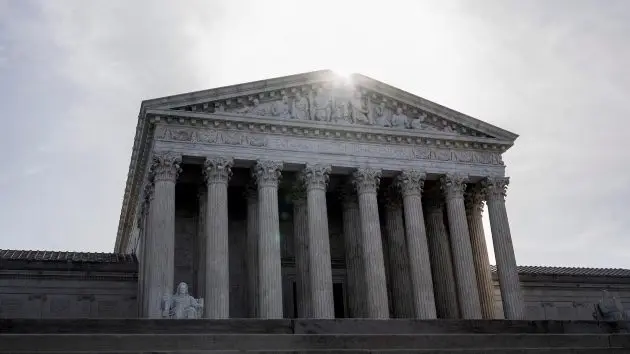
A landmark case before the Supreme Court on Wednesday will determine whether that longstanding cultural norm and legal precedent will continue, or whether sweeping bureaucratic changes that could impact millions will soon take effect.
President Donald Trump is asking the justices to uphold his Day 1 executive order eliminating birthright citizenship under a novel interpretation of the 14th Amendment and requiring parents to prove their own legal status before citizenship is granted to their children.
All lower courts that have considered the case struck the order down.
The amendment, which was ratified in 1868, says all “persons born or naturalized in the U.S. and subject to the jurisdiction thereof” are citizens. Congress later codified the same language in federal citizenship law in 1940.
“Look at the dates of this long ago legislation – THE EXACT END OF THE CIVIL WAR!” Trump posted on social media Monday. “It is about the BABIES OF SLAVES!”
Trump argues children born to parents who are not American citizens or legal permanent residents were never considered “subject to the jurisdiction” of the U.S. because they still owe political “allegiance” to a foreign nation.
Courts and the government, however, have repeatedly interpreted the 14th Amendment to unambiguously confer citizenship on all children born on U.S. soil, including to babies of unauthorized noncitizens and temporary residents, such as international students, foreign nationals who are in the U.S. on tourist visas and seasonal workers.
“The [14th] Amendment, in clear words and in manifest intent, includes the children born, within the territory of the United States, of all other persons, of whatever race or color, domiciled within the United States,” wrote Justice Horace Gray in an 1898 Supreme Court opinion addressing the status of children born to noncitizens.
Immigrant advocates and civil liberties groups insist Trump’s order is blatantly unconstitutional — contrary to the plain text of the Constitution and history of the citizenship clause — and would unleash “chaos” nationwide.
“The impacts on this country would be catastrophic,” said ACLU attorney Cody Wofsy, who is leading the case against the order.
“Most directly, the children who would be stripped of their citizenship would be … subject to arrest, detention and deportation from the only country they’ve ever known,” Wofsy said.
An estimated 255,000 children born every year on U.S. soil to noncitizen parents could lose legal status under Trump’s order, according to the Migration Policy Institute. Some may have difficulty establishing citizenship in any country, effectively being born as “stateless.”
“Babies [born to parents] from countries like Nepal, Afghanistan, Bhutan, where there is not a clear pathway to citizenship in their home countries,” said Anisa Rahm, legal director of the South Asian American Justice Collaborative. “So therefore, where do they belong?”
While the administration insists the order will only apply to children born after it takes effect, legal scholars have warned that a ruling striking down birthright citizenship could have retroactive consequences.
“The citizenship of other Americans could be called into question,” said Winnie Kao, an attorney with the Asian Law Caucus, one of the groups that brought a class-action suit against the administration over the order.
“Vast swaths of U.S. law would need to be reexamined because they are premised on birthright citizenship,” added Kao. “It will also be a total administrative and bureaucratic nightmare for everyone — even for parents who are U.S. citizens.”
An ABC News review of Trump administration plans for implementing a new citizenship policy across federal agencies suggests a more involved and potentially complicated process for new parents than currently exists, if the executive order takes effect.
The Social Security Administration says birth certificates would no longer be sufficient documentation to obtain a new Social Security Number for a newborn.
“SSA will require evidence that such a person’s mother and/or father is a U.S. citizen or in an eligible immigration status at the time of the person’s birth,” the agency wrote in a July 2025 guidance memo.
Parents would first need to submit their own citizenship documentation by mail, phone or online, the agency said. Alternatively, parents could provide a “self-attestation” of citizenship subject to “state and federal penalties for perjury,” according to the memo.
The State Department says it would adopt similar verification measures for passport applicants.
For children born to lawful but temporary immigrants — who would no longer be eligible for citizenship — the U.S. Citizenship and Immigration Services says parents would need to register to obtain the same temporary legal status for their kids.
Federally funded benefits for children, like nutrition assistance and health care services, provided by the Department of Health and Human Services would also require extensive documentation by all parents to prove their children were citizens at birth, the agency said in a memo.
During oral arguments last year in a predecessor case involving Trump’s birthright citizenship order, Justice Brett Kavanaugh — often a key vote in hotly contested cases — voiced concern about whether the government would be able to carry out citizenship checks for parents of the more than 3.6 million babies born in the U.S. each year.
“Federal officials will have to figure that out essentially,” U.S. Solicitor General John Sauer told the justice under questioning.
“How?” Kavanaugh responded skeptically.
“So, you can imagine a number of ways –” Sauer began.
“Such as?” Kavanaugh quipped. “For all the newborns? Is that how it’s going to work?”
Sauer replied at the time that the administration did not have all the details worked out because courts had blocked the executive order in full.
Polls show the nation is sharply divided over the issue of American citizenship for newborn children of unauthorized immigrants. Half of adults — 50% — say they should receive U.S. citizenship; 49% say they should not, according to an April 2025 Pew Research Center survey.
Copyright © 2026, ABC Audio. All rights reserved.