
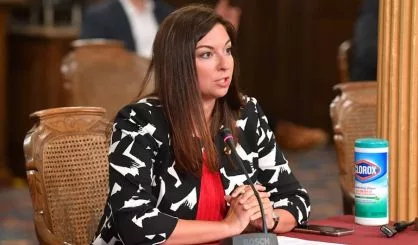
Michigan House Energy Committee Chair Pauline Wendzel is criticizing Attorney General Dana Nessel’s new lawsuit against major oil companies, calling it a political distraction and a misuse of resources.
In a statement, the Watervliet Republican said the legal action targets companies “that keep Michigan running” and shifts focus away from what she described as Democratic energy policies that are raising costs and threatening reliability.
“This lawsuit is a shameful waste of taxpayer resources from an Attorney General more interested in appeasing climate activists than serving Michigan families,” Wendzel said. She argued oil and natural gas remain essential for heating homes, fueling vehicles and powering industry, and said recent “green energy mandates” passed by Democrats are the real driver of higher utility bills and grid concerns. Wendzel said House Republicans plan to introduce a new energy plan focused on “reliability, affordability, and accountability.”
Last week, Nessel’s office announced it filed a federal antitrust lawsuit in U.S. District Court for the Western District of Michigan against BP, Chevron, Exxon Mobil, Shell and the American Petroleum Institute. The suit alleges the companies violated the Sherman Antitrust Act, the Clayton Antitrust Act and the Michigan Antitrust Reform Act.
The attorney general contends the defendants acted as a cartel, engaging in a long-running conspiracy to restrain trade and suppress competition from renewable energy sources in order to maintain dominance in transportation and primary energy markets. The lawsuit alleges the companies worked for decades to abandon renewable products, manipulate patents, suppress information about fossil fuel impacts, mislead institutions, intimidate watchdogs and coordinate through trade associations to divert investment away from renewable energy.
According to the complaint, those actions reduced the availability of renewable energy options, limited consumer choice and led to “supracompetitive” prices for fossil fuel products, contributing to what Nessel called an energy affordability crisis.
“Rising energy and transportation costs harm everyone,” Nessel said in a statement. “These out-of-control costs are not the result of natural economic inflation, but due to the greed of these corporations who prioritized their own profit and marketplace dominance over competition and consumer savings.”
The lawsuit also cites broader economic impacts, including climate-related costs, insurance increases and damage to property values and the state’s economy.