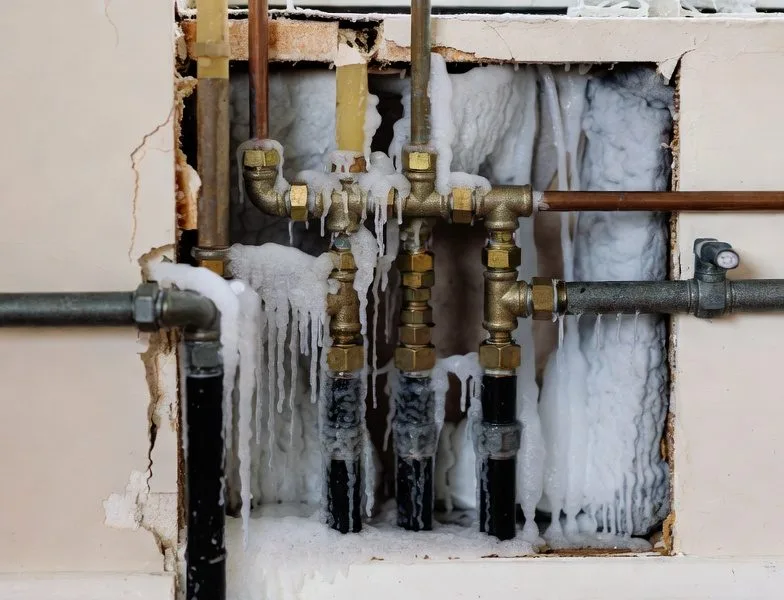
With frigid Arctic air moving into our area and wind chills dropping as low as minus 25, homeowners are urged to take precautions to prevent frozen and burst pipes. John Nedoba, owner of Boelcke Heating, Air Conditioning and Plumbing, says preparation is key.
“You want to make sure you don’t have any hoses left from summer attached to your faucets and spigots. You want to make sure those are all disconnected and drained out,” said Nedoba. “If you have any shutoffs inside that go to outdoor spigots, you want to make sure those are valved off. Another good thing is open up cabinets and make sure there’s some warm air getting underneath your kitchen sink.”
Nedoba says for homes prone to freezing, leaving a faucet on a slow drip can help keep water moving and reduce the risk of ice forming. Basements and crawl spaces are particularly vulnerable. Keeping the thermostat at a consistent temperature, even overnight, can prevent both pipe freezing and potential furnace issues that can leave a home without heat.
Nedoba says, if the worst happens and your pipes DO burst, take action quickly.
“You want to try and find the main water shutoff in your home, turn it off. You can put some heat on it, a space heater, try and thaw it out that way, get some warm air around it. But when you do that, you want to make sure you open up your faucet so that expanding ice has somewhere to relieve the pressure.”
He also cautions homeowners who plan to be away during extreme cold should arrange for a neighbor or friend to check the home, especially if it’s a seasonal property.
Nedoba also warns that ruptures can sometimes appear when turning water back on in the spring, particularly at outdoor spigots. Overall, he says, maintaining some water flow, keeping the thermostat up, and ensuring warm air reaches vulnerable areas can go a long way toward preventing winter plumbing disasters.